Postmenopausal Syndrome
Postmenopausal Syndrome
Definition
Postmenopausal Syndrome refers to a collection of symptoms and health changes that occur in women after menopause — the time when menstruation permanently stops, usually defined as 12 consecutive months without a period. This syndrome is mainly due to the decline in estrogen and other hormonal changes after menopause.
Causes
-
Natural decline in estrogen and progesterone levels after menopause.
-
Aging process itself.
-
Other health conditions that may develop or worsen after menopause.
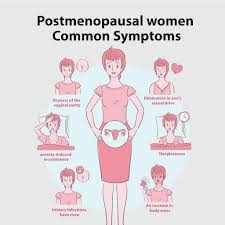
Common Symptoms
-
Vasomotor symptoms:
-
Hot flashes (sudden feelings of heat, often with sweating)
-
Night sweats
-
-
Psychological symptoms:
-
Mood swings
-
Anxiety
-
Depression
-
Irritability
-
Difficulty concentrating or memory issues ("brain fog")
-
-
Urogenital symptoms:
-
Vaginal dryness
-
Itching or burning
-
Painful intercourse (dyspareunia)
-
Urinary incontinence or increased urinary frequency
-
-
Physical symptoms:
-
Sleep disturbances (insomnia)
-
Joint and muscle pain
-
Fatigue
-
-
Others:
-
Decreased libido
-
Osteoporosis risk increases due to lower estrogen
-
Changes in skin elasticity and hair thinning
-
Types or Phases
Postmenopausal symptoms can broadly be categorized based on time and severity:
-
Early postmenopause: Typically the first 1-3 years after menopause, characterized mainly by hot flashes, mood symptoms.
-
Late postmenopause: Long-term effects like osteoporosis, cardiovascular risks become more prominent.
Diagnosis
-
Based on clinical history (menstrual history and symptoms).
-
Physical examination.
-
Sometimes blood tests to check hormone levels (FSH, LH, estrogen).
-
Bone density test if osteoporosis is suspected.
Treatment
Lifestyle Modifications
-
Regular exercise (helps mood, sleep, bone health)
-
Balanced diet rich in calcium and vitamin D
-
Avoiding triggers for hot flashes (spicy food, caffeine, alcohol)
-
Stress management techniques (yoga, meditation)
Medical Treatment
Hormone Replacement Therapy (HRT)
-
Estrogen alone (if no uterus)
-
Estrogen + progesterone (if uterus intact)
-
Effective for relieving hot flashes, vaginal symptoms, and preventing osteoporosis.
-
Must be used under medical supervision due to risks (breast cancer, blood clots).
Non-Hormonal Medications
-
Antidepressants (SSRIs/SNRIs) for mood and hot flashes.
-
Vaginal estrogen creams or lubricants for dryness.
-
Bisphosphonates or other osteoporosis treatments.
Homeopathic and Ayurvedic Approaches
-
Homeopathy: Remedies like Sepia, Lachesis, Pulsatilla may be used based on symptom patterns (consult a qualified practitioner).
-
Ayurveda: Herbs like Shatavari, Ashwagandha, Guduchi are traditionally used to balance hormones and improve symptoms, alongside dietary and lifestyle guidance.
Complications if Untreated
-
Osteoporosis leading to fractures
-
Increased cardiovascular disease risk
-
Chronic urogenital issues
-
Persistent mood disorders
Summary
Postmenopausal Syndrome is a set of physical and emotional changes after menopause due to hormonal decline. While it is a natural phase, symptoms can affect quality of life and may require treatment through lifestyle changes, hormone therapy, or other supportive measures.