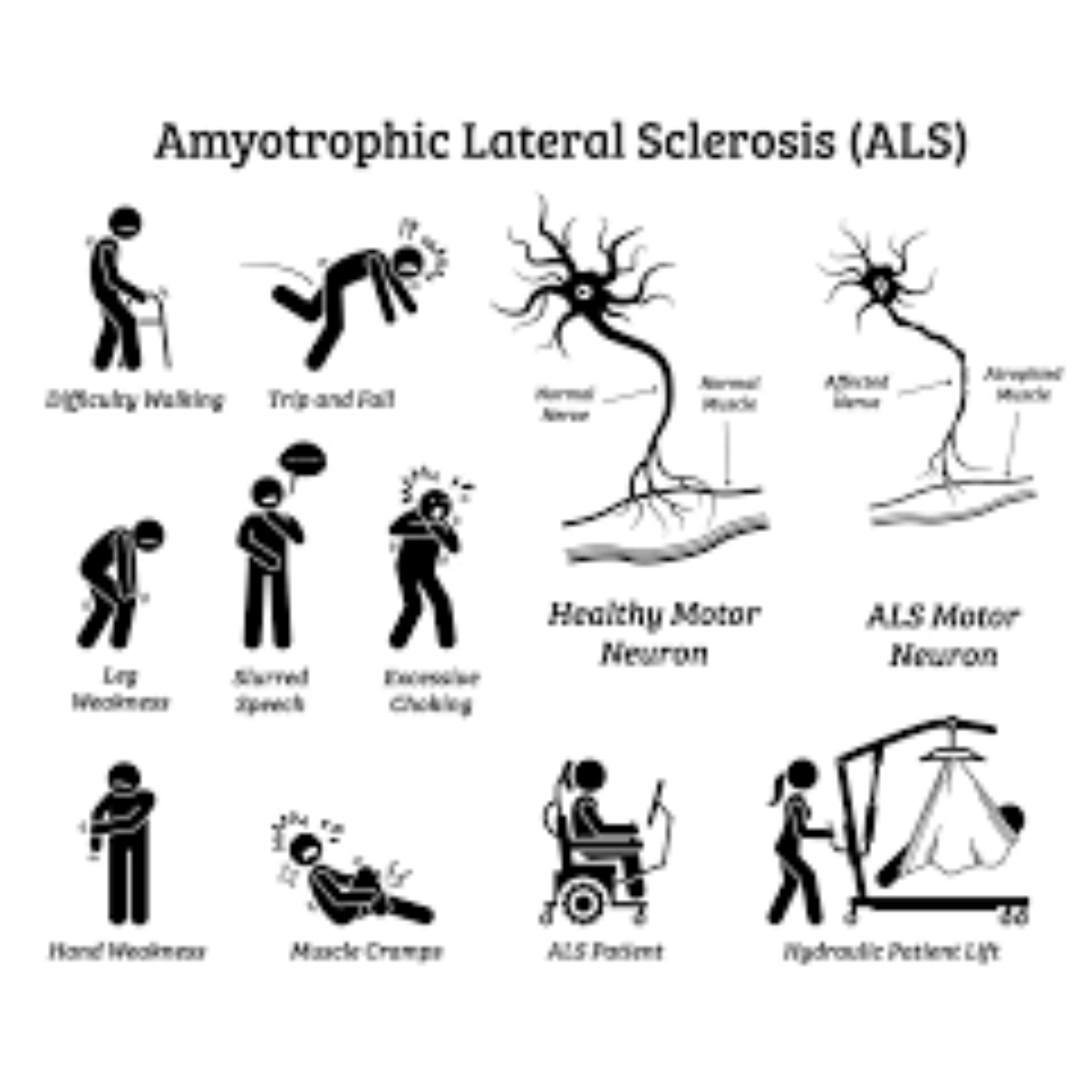
Amyotrophic Lateral Sclerosis (ALS) - Motor Neuron Weakness
Amyotrophic Lateral Sclerosis (ALS): Description, Symptoms, and Treatments (Homeopathic & Ayurvedic)
What is Amyotrophic Lateral Sclerosis (ALS)?
Amyotrophic Lateral Sclerosis (ALS), also known as Lou Gehrig's disease, is a progressive neurodegenerative disorder that affects nerve cells in the brain and spinal cord. ALS leads to the degeneration of motor neurons, which are responsible for controlling voluntary muscles. Over time, the loss of motor neurons results in muscle weakness, loss of mobility, and, eventually, difficulty in speaking, swallowing, and breathing.
Causes
The exact cause of ALS is unknown, but potential factors include:
- Genetic Mutations: Inherited mutations account for 5-10% of cases (familial ALS).
- Environmental Factors: Exposure to toxins, heavy metals, or physical trauma may contribute.
- Oxidative Stress: Damage to cells caused by free radicals.
- Abnormal Protein Aggregation: Accumulation of faulty proteins in nerve cells.
Common Symptoms of ALS
ALS symptoms progress gradually, starting with mild signs and worsening over time. They are categorized based on the affected muscle groups.
Early Symptoms
- Muscle weakness or stiffness, especially in the arms, legs, or hands.
- Difficulty gripping objects or performing fine motor tasks (e.g., buttoning a shirt).
- Muscle cramps and twitching (fasciculations).
- Slurred speech or nasal tone.
Progressive Symptoms
- Weakness spreads to other muscles, including those controlling speech and swallowing.
- Difficulty walking, tripping, or balance problems.
- Muscle atrophy and weight loss.
Advanced Symptoms
- Paralysis of voluntary muscles, leading to complete immobility.
- Severe difficulty breathing, requiring ventilatory support.
- Cognitive or behavioral changes (in some cases).
Homeopathic Treatments for ALS
Homeopathy focuses on managing symptoms, slowing disease progression, and improving the patient's quality of life. Remedies are chosen based on individual constitution and symptom presentation.
Common Homeopathic Remedies
- Causticum: For progressive muscle weakness, stiffness, and paralysis. Beneficial for patients with difficulty swallowing or speaking.
- Plumbum Metallicum: For marked muscle atrophy and weakness, especially in the limbs.
- Lathyrus Sativus: Effective in managing spasticity and stiffness in the lower limbs.
- Gelsemium: For weakness, trembling, and fatigue, especially when accompanied by mental and emotional exhaustion.
- Zincum Metallicum: For fasciculations, restlessness, and twitching in muscles.
How to Use Homeopathic Remedies
- Potencies: Commonly used potencies are 6C, 30C, or 200C, based on the severity of symptoms.
- Dosage: It is essential to consult a professional homeopath for personalized prescriptions and dosage adjustments.
Ayurvedic Treatments for ALS
In Ayurveda, ALS can be linked to an aggravated Vata dosha, which governs movement and the nervous system. Treatments aim to balance Vata, nourish the nervous tissue, and slow degeneration.
Ayurvedic Herbs for ALS
- Ashwagandha (Withania Somnifera): A rejuvenative herb that strengthens muscles, reduces stress, and supports nerve health.
- Bala (Sida Cordifolia): Enhances muscle strength and reduces fatigue.
- Shatavari (Asparagus Racemosus): Supports nerve health and improves stamina.
- Brahmi (Bacopa Monnieri): Improves cognitive function and reduces oxidative stress.
- Guggulu (Commiphora Mukul): Anti-inflammatory and neuroprotective herb that helps manage symptoms of ALS.
Ayurvedic Therapies
- Abhyanga (Oil Massage): Regular massage with medicated oils like Mahanarayan or Dhanvantaram oil to nourish muscles and calm Vata.
- Shirodhara: Pouring warm herbal oil on the forehead to relax the nervous system and reduce anxiety.
- Panchakarma Detoxification: Includes therapies like Vasti (medicated enema) and Nasya (nasal oil therapy) to cleanse and balance Vata.
- Basti Therapy: Administering herbal oils or decoctions via enema to nourish and balance the nervous system.
Dietary and Lifestyle Recommendations
- Diet:
- Eat warm, moist, and easily digestible foods, such as soups, rice, and ghee.
- Avoid cold, raw, or dry foods that aggravate Vata.
- Include healthy fats (e.g., coconut oil, nuts, and seeds) to nourish tissues.
- Lifestyle:
- Practice yoga and meditation to reduce stress and improve flexibility (avoid strenuous exercises).
- Maintain a regular daily routine to stabilize Vata.
- Keep the body warm and protected from cold and wind.
Conclusion
While there is no known cure for ALS, homeopathy and Ayurveda offer supportive therapies to manage symptoms, improve quality of life, and delay disease progression. Both approaches emphasize individualized treatment and holistic care, addressing the patient's physical, mental, and emotional well-being. Early intervention and consultation with qualified practitioners are crucial. In advanced stages, complementary therapies can be integrated with modern medical care for the best outcomes.