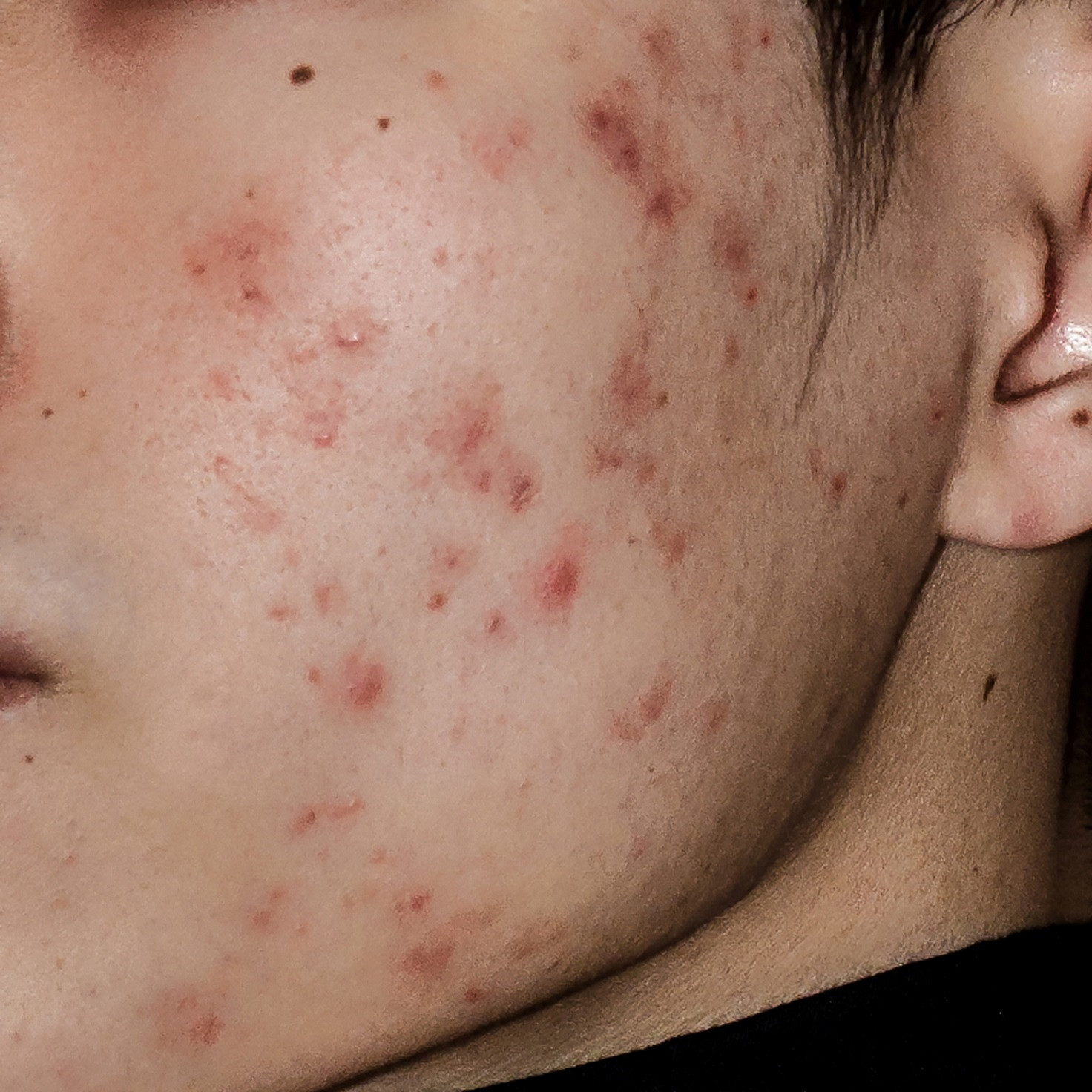
Acne or Pimples
What is Acne?
Acne, also known as acne vulgaris, is a common skin condition that affects individuals, particularly during adolescence, though it can occur at any age. It primarily involves the skin's sebaceous (oil) glands, which are overactive and produce excess oil. This excess oil, combined with dead skin cells, clogs pores, creating an environment for bacteria to grow. This leads to the formation of acne lesions such as pimples, blackheads, and cysts.
Types of Acne Lesions:
- Blackheads (open comedones): Small, dark-colored bumps that form when a pore is clogged but remains open.
- Whiteheads (closed comedones): Small, flesh-colored bumps that occur when a pore is completely blocked.
- Papules: Small, red, raised bumps caused by inflammation.
- Pustules: Pimples with a visible white or yellow center (pus).
- Nodules: Large, painful, deep lumps under the skin.
- Cysts: Large, pus-filled lumps that are painful and can lead to scarring.
Symptoms of Acne:
- Clogged pores or visible blackheads and whiteheads.
- Pimples (red, raised, or pus-filled lesions).
- Inflamed, painful bumps (papules and pustules).
- Nodules and cysts, which are deeper, larger, and more painful.
- Scarring after healing.
- Acne often occurs on the face, but it can also appear on the neck, chest, back, and shoulders.
Factors Contributing to Acne:
- Hormonal Changes: Puberty, menstruation, pregnancy, and certain hormonal disorders can trigger increased oil production in the skin.
- Diet: Some studies suggest that foods high in sugar, dairy, or high glycemic foods can exacerbate acne.
- Stress: Stress can trigger acne flare-ups due to hormonal changes and increased oil production.
- Medications: Certain drugs, including corticosteroids and some birth control methods, may contribute to acne.
- Genetics: A family history of acne can make an individual more prone to developing it.
- Skin Care Products: Using products that clog pores (comedogenic) can aggravate acne.
Homeopathic Treatment for Acne
Homeopathy is a holistic form of treatment that focuses on treating the individual rather than just the condition. It uses natural substances in extremely diluted forms to stimulate the body’s healing processes. Below are some homeopathic remedies commonly used for acne, depending on the type and severity:
Common Homeopathic Remedies for Acne:
- Sulphur:
- Indications: Often used for acne with red, inflamed, and itchy pimples. It is particularly helpful when the skin is greasy, and the person feels a burning sensation.
- Mental Symptoms: Often indicated in people who are irritable, anxious, or have a tendency to be overly critical.
- Indications: Ideal for acne with pus-filled lesions, especially when the acne is deep and painful. This remedy helps in the healing of abscesses and pus accumulation.
- Mental Symptoms: Typically helpful for individuals who are slow to heal or have a tendency to be sluggish.
- Indications: Used when acne is painful, inflamed, and sensitive to touch, often with pus-filled cysts or abscesses. It's particularly useful when there’s a tendency for infections.
- Mental Symptoms: Can be helpful for people who are overly sensitive, anxious, or irritable.
- Indications: Best suited for acne that is large, deep, and inflamed, with a tendency to scar. It's especially indicated when acne occurs on the back and shoulders.
- Mental Symptoms: Often indicated for people who are overly anxious and prone to nervousness.
- Indications: Useful for individuals with acne that is accompanied by dryness and peeling, along with irritation. Pimples are often red and burning.
- Mental Symptoms: Suitable for anxious, fastidious people with a need for perfection and a tendency to worry.
- Indications: Good for acne that occurs on the forehead and around the mouth, often due to emotional stress or hormonal changes. Pimples can be accompanied by dryness and scaling.
- Mental Symptoms: Indicated for individuals who are introverted, sensitive, and suffer from emotional issues, particularly grief or disappointment.
- Indications: Used for acne with pus-filled pimples that are slow to heal or prone to scarring. It is also helpful for deep-rooted acne, such as cysts or nodules.
- Mental Symptoms: Suited for individuals who are perfectionistic, shy, and have a tendency to be overly critical of themselves.
- Indications: Often recommended for acne with dark spots or pigmentation after healing. It helps in clearing the skin and preventing scarring.
- Mental Symptoms: Typically used in individuals who are determined but may also feel mentally stressed or fatigued.
Additional Tips for Managing Acne Naturally:
- Dietary Considerations: A balanced diet with minimal processed foods and sugars can help reduce flare-ups. Some people find relief from avoiding dairy and high-glycemic foods.
- Stress Management: Since stress is a common trigger, practices like yoga, meditation, or regular exercise can help manage stress levels.
- Good Skin Hygiene: Gentle cleansing with a mild soap or acne-specific cleanser can help, but avoid over-washing, as this may dry out and irritate the skin.
- Topical Natural Remedies: Natural oils like tea tree oil or aloe vera gel can be applied to acne-prone areas for their antibacterial and soothing properties.
Conclusion:
While acne can be a frustrating condition, homeopathic remedies offer a holistic approach to healing, focusing on the body’s ability to balance and repair itself. It’s important to consult a qualified homeopath for an individualized treatment plan, as they can assess your unique symptoms and underlying conditions. Combining homeopathic treatment with good skincare, stress management, and dietary adjustments can help manage and reduce acne over time.