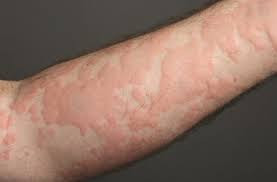
Urticaria (Hives)
Urticaria (Hives)
What is Urticaria?
Urticaria, or hives, is a common skin condition characterized by raised, itchy, red or skin-colored welts (wheals) on the skin. These welts can vary in size and shape and often appear suddenly. They typically cause intense itching and may last from a few minutes to several hours.
Causes
Urticaria occurs due to the release of histamine and other chemicals from mast cells in the skin, leading to swelling of the skin. Common triggers include:
-
Allergic reactions (food, insect stings, medications)
-
Infections (viral, bacterial)
-
Physical triggers (cold, heat, pressure, sunlight)
-
Stress or anxiety
-
Autoimmune disorders
-
Idiopathic (unknown cause, in many cases)
Types of Urticaria
-
Acute Urticaria
-
Lasts less than 6 weeks
-
Often caused by allergic reactions or infections
-
-
Chronic Urticaria
-
Persists more than 6 weeks
-
Often autoimmune or idiopathic in nature
-
Can be further divided into spontaneous or inducible types
-
-
Physical Urticaria
-
Triggered by physical stimuli such as pressure, cold, heat, sunlight, or vibration
-
-
Dermatographic Urticaria
-
Skin wheals appear when the skin is stroked or scratched
-
Symptoms
-
Raised, red or pale welts on the skin
-
Itching (can be severe)
-
Welts that change shape, move, disappear and reappear over hours
-
Swelling of deeper layers of skin (angioedema), especially around eyes, lips, hands, feet, or throat in some cases
-
Burning or stinging sensation
Diagnosis
-
Clinical examination
-
Patient history of triggers and duration
-
Allergy testing (skin prick or blood tests)
-
Blood tests to rule out infections or autoimmune causes
-
Challenge tests for physical urticaria
Treatment
1. Avoidance of triggers where possible
2. Medications:
-
Antihistamines: First-line treatment to reduce itching and swelling (e.g., cetirizine, loratadine)
-
H2 blockers: Sometimes used in combination
-
Corticosteroids: Short-term use in severe cases
-
Leukotriene receptor antagonists: In resistant cases
-
Omalizumab (Xolair): For chronic spontaneous urticaria unresponsive to antihistamines
3. Home Remedies:
-
Cool compresses to reduce itching
-
Avoid scratching or irritating skin
-
Loose, comfortable clothing
When to See a Doctor
-
If hives last more than 24 hours or recur frequently
-
Difficulty breathing or swallowing (possible anaphylaxis)
-
Severe swelling around the face or throat
-
Associated fever, joint pain, or other systemic symptoms
Prognosis
-
Acute urticaria often resolves completely without complications
-
Chronic urticaria may persist for months or years but often improves over time
-
Quality of life can be significantly affected by symptoms