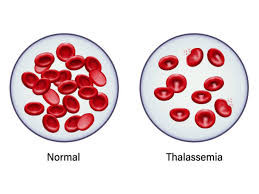
Thalassemia
Thalassemia
Definition:
Thalassemia is a group of inherited blood disorders characterized by the body’s inability to produce adequate amounts of hemoglobin, the protein in red blood cells that carries oxygen throughout the body. This leads to anemia, which can range from mild to severe.
Types of Thalassemia:
-
Alpha Thalassemia
Caused by mutations in the alpha-globin gene. Severity depends on how many of the four alpha-globin genes are affected:-
Silent carrier (1 gene affected)
-
Alpha thalassemia trait/minor (2 genes affected)
-
Hemoglobin H disease (3 genes affected)
-
Alpha thalassemia major (4 genes affected; usually fatal before or shortly after birth)
-
-
Beta Thalassemia
Caused by mutations in the beta-globin gene. Severity depends on the mutation type:-
Beta thalassemia minor (trait; mild or no symptoms)
-
Beta thalassemia intermedia (moderate symptoms)
-
Beta thalassemia major (Cooley’s anemia; severe anemia requiring regular transfusions)
-
Causes:
-
Genetic mutation inherited from one or both parents.
-
Autosomal recessive inheritance pattern.
Symptoms:
-
Fatigue and weakness
-
Pale or yellowish skin (jaundice)
-
Facial bone deformities, especially in the cheeks and forehead
-
Slow growth and delayed puberty
-
Abdominal swelling (due to enlarged spleen or liver)
-
Dark urine
-
Breathlessness
-
Enlarged spleen or liver
Diagnosis:
-
Complete blood count (CBC) showing anemia
-
Peripheral blood smear
-
Hemoglobin electrophoresis (to identify abnormal hemoglobin types)
-
Genetic testing (to confirm mutations)
Treatment:
-
Mild forms (minor/trait): Usually no treatment needed, just regular monitoring.
-
Severe forms (major/intermedia):
-
Regular blood transfusions
-
Iron chelation therapy to prevent iron overload from transfusions
-
Folic acid supplements
-
Bone marrow or stem cell transplant (potential cure in some cases)
-
Splenectomy in certain cases
-
Prognosis:
-
With proper treatment, many people with thalassemia live into adulthood.
-
Without treatment, severe forms can be life-threatening.
Prevention:
-
Genetic counseling for at-risk couples
-
Prenatal diagnosis and screening in populations with high prevalence