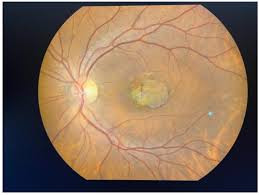
Stargardt Disease
Definition
Stargardt disease is a rare inherited eye disorder that causes progressive vision loss, typically beginning in childhood or adolescence. It is the most common form of juvenile macular degeneration and primarily affects the macula, the central part of the retina responsible for sharp, central vision.
Causes
-
Genetic mutation: Most often caused by mutations in the ABCA4 gene.
-
Autosomal recessive inheritance: Both parents must be carriers for a child to be affected.
Symptoms
-
Gradual loss of central vision
-
Difficulty reading or recognizing faces
-
Sensitivity to light (photophobia)
-
Impaired color vision
-
Wavy or distorted vision (metamorphopsia)
-
Blind spots in central vision (scotomas)
Types
-
Classic Stargardt disease: Childhood-onset, more rapid progression.
-
Late-onset Stargardt disease: Appears in adulthood, generally slower progression.
Diagnosis
-
Fundus examination: Yellowish flecks in the retina
-
Optical coherence tomography (OCT): Shows thinning of the retina
-
Fundus autofluorescence: Highlights lipofuscin buildup
-
Electroretinography (ERG): Assesses retinal function
-
Genetic testing: Confirms ABCA4 or other gene mutations
Treatment
There is currently no cure, but management strategies include:
Conventional Care
-
Low vision aids: Magnifiers, special glasses
-
UV-blocking sunglasses: To reduce light damage
-
Avoid vitamin A supplementation: Excess vitamin A can worsen the condition
Research & Emerging Therapies
-
Gene therapy: Experimental approaches targeting ABCA4 mutations
-
Stem cell therapy: Under clinical trials
-
Pharmacologic agents: Aiming to slow lipofuscin buildup
Homeopathic & Ayurvedic Approaches
Note: These are complementary options, not proven cures.
Homeopathy
-
Physostigma: Used for retinal degeneration
-
Ruta graveolens: Supports general eye health
Ayurveda
-
Triphala: Antioxidant-rich formulation for eye health
-
Netra Tarpana: Ayurvedic eye treatment using medicated ghee
-
Dietary support: Leafy greens, amla, carrots, turmeric
Prognosis
-
Vision loss is progressive but rarely leads to complete blindness.
-
Peripheral vision usually remains intact.
-
Early diagnosis and supportive measures can enhance quality of life.
Conclusion
Stargardt disease is a genetic condition with no current cure, but ongoing research is promising. Supportive treatments and visual aids can help manage symptoms and maintain independence. Genetic counseling is recommended for affected families.