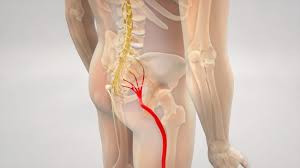
Sciatica
What is Sciatica?
Sciatica refers to pain that radiates along the path of the sciatic nerve — which branches from your lower back through your hips and buttocks and down each leg. It typically affects only one side of your body.
Causes of Sciatica
-
Herniated Disc: The most common cause, when a disc in the spine presses on the sciatic nerve.
-
Spinal Stenosis: Narrowing of the spinal canal compresses the nerve.
-
Piriformis Syndrome: The piriformis muscle in the buttocks irritates the sciatic nerve.
-
Degenerative Disc Disease: Age-related wear and tear affecting spinal discs.
-
Spondylolisthesis: A vertebra slips forward over another, pinching the nerve.
-
Trauma or Injury: Direct injury to the lower back or pelvis.
-
Tumors or infections (rare).
Symptoms of Sciatica
-
Sharp, shooting pain radiating from the lower back through the buttock and down the leg.
-
Burning or tingling sensations.
-
Muscle weakness in the affected leg or foot.
-
Numbness or difficulty moving the leg or foot.
-
Pain worsens with sitting, coughing, or sneezing.
-
Usually affects only one side of the body.
Diagnosis
-
Physical Exam: Checking muscle strength, reflexes, and pain response.
-
Imaging Tests: MRI or CT scans to identify herniated discs or spinal stenosis.
-
Nerve tests: Electromyography (EMG) to assess nerve function.
Treatment of Sciatica
1. Conservative/Home Care
-
Rest: Avoid prolonged sitting or standing.
-
Cold/Heat Therapy: Ice packs first 48 hours, then warm compresses.
-
Pain Relievers: NSAIDs like ibuprofen or naproxen.
-
Physical Therapy: Stretching and strengthening exercises.
-
Lifestyle Changes: Maintain proper posture, avoid heavy lifting.
2. Medications
-
Muscle relaxants.
-
Oral steroids.
-
In severe cases, nerve pain medications like gabapentin.
3. Alternative Therapies
-
Acupuncture.
-
Chiropractic adjustments.
-
Yoga and Pilates for flexibility.
4. Surgical Options
-
Considered if pain persists beyond 6 weeks or worsens.
-
Discectomy (removal of herniated disc part).
-
Laminectomy (removal of bone causing nerve pressure).
Prevention Tips
-
Regular exercise to strengthen back muscles.
-
Maintain a healthy weight.
-
Practice good posture.
-
Avoid prolonged sitting.
-
Use proper techniques when lifting heavy objects.
When to See a Doctor Immediately?
-
Loss of bowel or bladder control.
-
Severe weakness in the leg.
-
Progressive worsening of symptoms.
-
Sudden, severe pain following trauma.