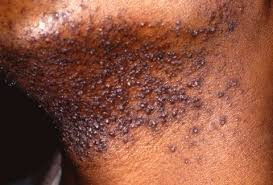
Pseudofolliculitis Barbae
Pseudofolliculitis Barbae (PFB)
Definition
Pseudofolliculitis barbae, commonly called "razor bumps," is a chronic inflammatory skin condition that occurs mainly in the beard area after shaving. It results from hair that curls back into the skin instead of growing outward, causing irritation and inflammation.
Causes
-
Curly or coarse hair: More common in people with tightly curled or coarse hair, as the hair tends to re-enter the skin after shaving.
-
Shaving too closely: Using very close shaving methods such as shaving against the grain or with very sharp razors.
-
Improper shaving techniques: Shaving too frequently or without proper lubrication.
-
Lack of exfoliation: Dead skin cells block hair follicles, leading to ingrown hairs.
Symptoms
-
Small, irritated bumps in the beard or shaving area.
-
Redness and inflammation.
-
Itching or tenderness.
-
Sometimes pustules or secondary infection.
-
Hyperpigmentation or scarring in chronic cases.
Diagnosis
Primarily clinical, based on the appearance of characteristic bumps and the patient's history of shaving.
Treatment
General Measures
-
Avoid shaving for a period to allow inflammation to subside.
-
Use proper shaving techniques: shave with the grain, use single-blade razors, and avoid very close shaving.
-
Apply warm compresses to soften skin and open follicles.
Medical Treatment
-
Topical corticosteroids: To reduce inflammation.
-
Topical antibiotics: If secondary bacterial infection occurs.
-
Retinoids: To promote exfoliation and reduce follicle plugging.
-
Laser hair removal: In persistent or severe cases to reduce hair growth.
Home Remedies
-
Use gentle exfoliation to remove dead skin.
-
Apply soothing agents like aloe vera or witch hazel.
-
Moisturize to prevent dryness and irritation.
Prevention
-
Use electric clippers instead of razors.
-
Shave less frequently.
-
Use shaving gels or creams to reduce friction.
-
Avoid shaving against the grain.
Summary
Pseudofolliculitis barbae is a common shaving-related skin condition caused by ingrown hairs, leading to bumps, redness, and irritation in the beard area. Proper shaving techniques, medical treatment, and sometimes laser therapy can help manage and prevent this condition.