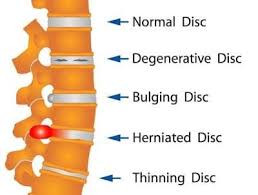
Prolapsed Intervertebral Disc
Prolapsed Intervertebral Disc (Herniated Disc)
What is it?
A Prolapsed Intervertebral Disc occurs when the soft inner gel-like center (nucleus pulposus) of an intervertebral disc bulges out through a tear or weakness in the outer fibrous ring (annulus fibrosus). This can put pressure on nearby nerves, causing pain and other symptoms.
Anatomy Context
-
The spine is made up of vertebrae separated by intervertebral discs.
-
Discs act as cushions and allow flexibility.
-
Each disc has:
-
A tough outer layer (annulus fibrosus)
-
A soft inner gel (nucleus pulposus)
-
Causes / Risk Factors
-
Aging (discs lose water content and elasticity)
-
Repetitive strain or injury
-
Lifting heavy objects improperly
-
Sudden twisting movements
-
Obesity (extra stress on the spine)
-
Sedentary lifestyle or poor posture
-
Genetics can play a role
Common Locations
-
Lumbar spine (lower back) — most common site
-
Cervical spine (neck)
-
Thoracic spine (mid-back) — less common
Symptoms
-
Localized back or neck pain
-
Radiating pain (sciatica in lumbar cases)
-
Numbness or tingling in arms or legs
-
Muscle weakness
-
Difficulty in movement or walking
-
In severe cases, loss of bladder or bowel control (medical emergency)
Diagnosis
-
Medical history and physical exam
-
Neurological exam (reflexes, sensation, muscle strength)
-
Imaging:
-
MRI (best for soft tissue and disc details)
-
CT scan
-
X-rays (to rule out bone issues)
-
Treatment
Conservative (Non-surgical)
-
Rest and activity modification
-
Pain relief: NSAIDs, analgesics
-
Physical therapy and exercises
-
Hot/cold therapy
-
Muscle relaxants
-
Epidural steroid injections (in some cases)
-
Lifestyle changes (weight loss, posture correction)
Surgical (if severe or no improvement)
-
Discectomy (removal of herniated disc portion)
-
Laminectomy (removal of part of vertebra)
-
Spinal fusion (in some cases)
Home Care and Prevention
-
Maintain proper posture
-
Avoid heavy lifting or lift correctly (bend knees, not back)
-
Regular low-impact exercise (walking, swimming)
-
Maintain healthy weight
-
Use ergonomic chairs/support
When to see a doctor immediately?
-
Severe leg or arm weakness
-
Loss of bladder or bowel control
-
Severe, worsening pain unrelieved by rest or medication