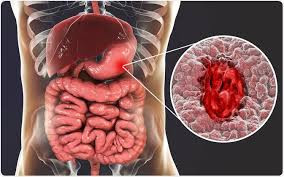
Peptic Ulcer
Peptic Ulcer
Definition
A peptic ulcer is an open sore or lesion that develops on the inner lining of the stomach (gastric ulcer), the upper part of the small intestine (duodenal ulcer), or occasionally the esophagus. It occurs when the protective mucous layer of the stomach or duodenum is damaged, allowing stomach acid to erode the lining.
Causes
-
Helicobacter pylori (H. pylori) infection — a common bacterial infection that damages the mucous lining.
-
Long-term use of NSAIDs (Non-Steroidal Anti-Inflammatory Drugs) like aspirin, ibuprofen.
-
Excessive stomach acid production due to stress, smoking, or certain foods.
-
Smoking and alcohol consumption.
-
Rarely, Zollinger-Ellison syndrome (tumors causing excess acid).
Symptoms
-
Burning stomach pain (often between meals or at night).
-
Bloating and feeling full quickly.
-
Nausea or vomiting.
-
Heartburn or acid reflux.
-
In severe cases:
-
Vomiting blood (may look like coffee grounds).
-
Black, tarry stools (indicating bleeding).
-
Sudden sharp stomach pain (possible perforation).
-
Types
-
Gastric Ulcer: Ulcer in the stomach lining.
-
Duodenal Ulcer: Ulcer in the first part of the small intestine (duodenum).
-
Esophageal Ulcer: Ulcer in the lower esophagus.
Diagnosis
-
Medical history and physical exam.
-
Endoscopy (upper GI endoscopy) to visually inspect the ulcer.
-
Testing for H. pylori through breath, stool, or blood tests.
-
Barium swallow X-ray (less commonly used now).
Treatment
Medical Treatment
-
Antibiotics to eradicate H. pylori infection.
-
Proton pump inhibitors (PPIs) (e.g., omeprazole) to reduce stomach acid.
-
H2 receptor blockers (e.g., ranitidine).
-
Antacids to neutralize stomach acid.
-
Protective medications like sucralfate to coat the ulcer.
Lifestyle & Home Care
-
Avoid NSAIDs.
-
Quit smoking and limit alcohol intake.
-
Eat smaller, more frequent meals.
-
Avoid spicy, acidic, or irritating foods.
-
Manage stress.
Complications
-
Internal bleeding.
-
Perforation (hole in the stomach or intestinal wall).
-
Gastric obstruction due to swelling or scarring.
-
Increased risk of stomach cancer (rare).
Prevention
-
Avoid prolonged NSAID use or use protective medications if necessary.
-
Treat H. pylori infection promptly.
-
Avoid smoking and excessive alcohol.
-
Maintain a balanced diet and manage stress.