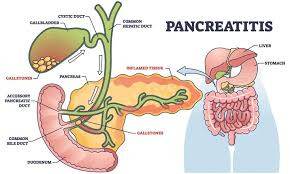
Pancreatitis
Pancreatitis
Definition
Pancreatitis is inflammation of the pancreas, an organ behind the stomach that produces digestive enzymes and hormones like insulin.
Types
-
Acute Pancreatitis
-
Sudden inflammation that lasts for a short time.
-
Usually reversible with proper treatment.
-
Chronic Pancreatitis
-
Long-lasting inflammation that leads to permanent damage.
-
Can cause scarring and affect pancreas function.
Causes
-
Gallstones blocking the pancreatic duct
-
Excessive alcohol consumption
-
Certain medications
-
High triglyceride levels
-
Pancreatic injury or surgery
-
Infections or genetic factors
Symptoms
-
Severe upper abdominal pain, often radiating to the back
-
Nausea and vomiting
-
Fever
-
Rapid pulse
-
Swollen and tender abdomen
-
Fatty, foul-smelling stools (in chronic cases)
Diagnosis
-
Blood tests showing elevated pancreatic enzymes (amylase, lipase)
-
Imaging: Ultrasound, CT scan, MRI
-
Endoscopic ultrasound or ERCP in some cases
Treatment
Acute Pancreatitis
-
Hospitalization for hydration and pain control
-
Fasting to rest the pancreas
-
Treat underlying cause (e.g., remove gallstones)
-
Nutritional support when recovery begins
Chronic Pancreatitis
-
Pain management
-
Enzyme supplements to aid digestion
-
Lifestyle changes: avoid alcohol, low-fat diet
-
Surgery in severe cases
Complications
-
Infection or abscess in the pancreas
-
Pseudocysts (fluid-filled sacs)
-
Pancreatic necrosis (tissue death)
-
Diabetes due to insulin production loss
-
Malnutrition
Prevention
-
Avoid excessive alcohol use
-
Maintain healthy triglyceride levels
-
Manage gallstones promptly
-
Balanced diet and healthy weight