Myotonia
Myotonia
What is Myotonia?
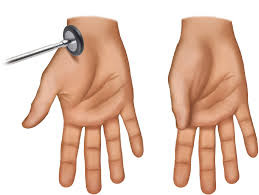
Myotonia is a neuromuscular condition characterized by delayed relaxation of muscles after voluntary contraction or mechanical stimulation. In simple terms, muscles have difficulty relaxing quickly once they contract.
Causes
Myotonia is mainly caused by genetic mutations affecting the muscle cell ion channels, particularly chloride or sodium channels, which disrupt normal muscle membrane electrical activity.
Types of Myotonia
-
Myotonia Congenita:
A genetic disorder caused by mutations in the CLCN1 gene affecting chloride channels. It usually presents in childhood or adolescence. Two subtypes:-
Thomsen disease (dominant)
-
Becker disease (recessive, usually more severe)
-
-
Paramyotonia Congenita:
Caused by mutations in the SCN4A gene affecting sodium channels. It often worsens with cold exposure and repeated muscle use. -
Myotonic Dystrophy:
A multisystem genetic disorder with myotonia as one of the features. It has two main types:-
Type 1 (DM1)
-
Type 2 (DM2)
-
-
Other forms: Related to other channelopathies or secondary causes.
Symptoms
-
Muscle stiffness or delayed relaxation after contraction
-
Difficulty releasing grip after handshake
-
Muscle cramps
-
Muscle weakness (in some forms)
-
Symptoms may worsen with cold or fatigue
-
Myotonic dystrophy also involves cataracts, cardiac issues, and other systemic symptoms.
Diagnosis
-
Clinical history and physical exam
-
Electromyography (EMG) shows characteristic myotonic discharges
-
Genetic testing to identify mutations
-
Muscle biopsy in some cases
Treatment
-
No cure, but symptoms can be managed.
-
Medications like mexiletine (a sodium channel blocker) can reduce stiffness.
-
Avoid cold exposure if paramyotonia is present.
-
Physical therapy and lifestyle modifications to improve muscle function.
-
Regular cardiac monitoring in myotonic dystrophy.