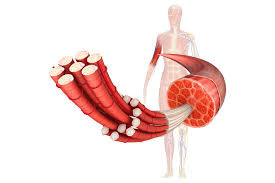
Myofibrillar Myopathies
Myofibrillar Myopathies (MFMs)
Definition
Myofibrillar Myopathies are a group of rare, genetically heterogeneous neuromuscular disorders characterized by progressive muscle weakness and structural abnormalities in the muscle fibers. They are caused by mutations affecting proteins involved in the myofibril structure, particularly those related to the Z-disk, which is critical for muscle contraction.
Pathophysiology
-
MFMs involve abnormal aggregation and disorganization of myofibrillar proteins.
-
Disrupted Z-disk and accumulation of protein aggregates lead to muscle fiber damage.
-
Key proteins implicated include desmin, filamin C, myotilin, alphaB-crystallin, and BAG3.
-
The damage typically starts around the Z-disk and extends into surrounding myofibrils.
Causes / Genetics
-
Mostly caused by mutations in genes encoding sarcomeric/Z-disk proteins.
-
Inheritance patterns can be autosomal dominant, recessive, or sporadic.
-
Commonly involved genes: DES (desmin), MYOT (myotilin), CRYAB (alphaB-crystallin), FLNC (filamin C), BAG3, among others.
Symptoms
-
Gradual, progressive muscle weakness.
-
Weakness usually starts in distal muscles (hands, feet) or proximal muscles (shoulders, hips), depending on subtype.
-
Muscle atrophy.
-
Possible cardiomyopathy (heart muscle involvement).
-
Respiratory muscle weakness in advanced stages.
-
Muscle stiffness or cramps.
-
Some patients may have neuropathy or sensory symptoms.
Types / Subtypes
MFMs are classified based on the mutated gene/protein involved and clinical features:
| Subtype | Gene | Typical Features |
|---|---|---|
| Desmin-related MFM | DES | Distal/proximal weakness, cardiomyopathy |
| Myotilinopathy | MYOT | Proximal weakness, late-onset |
| AlphaB-crystallin MFM | CRYAB | Early onset, severe cardiomyopathy possible |
| Filaminopathy | FLNC | Proximal weakness, often distal involvement |
| BAG3-related MFM | BAG3 | Childhood onset, cardiomyopathy, respiratory issues |
Diagnosis
-
Clinical examination: Muscle weakness pattern, family history.
-
Electromyography (EMG): Myopathic changes.
-
Muscle biopsy: Shows myofibrillar disorganization, Z-disk streaming, and protein aggregates.
-
Immunohistochemistry: Detects abnormal accumulation of specific proteins like desmin.
-
Genetic testing: Confirms mutation in related genes.
-
Cardiac evaluation is essential due to frequent cardiomyopathy.
Treatment
-
No cure currently available.
-
Symptomatic and supportive management:
-
Physical therapy to maintain mobility.
-
Orthopedic aids as needed.
-
Cardiac monitoring and treatment for cardiomyopathy.
-
Respiratory support in advanced cases.
-
-
Experimental therapies and clinical trials are ongoing for gene-based and protein-targeted treatments.
Prognosis
-
Slowly progressive muscle weakness.
-
Severity and progression vary widely by subtype and individual.
-
Cardiac involvement can be life-threatening.
-
Regular follow-up with neurology and cardiology is critical.