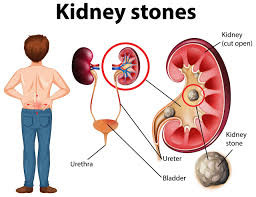
Kidney Stones (Nephrolithiasis)
Kidney Stones (Nephrolithiasis)
Definition:
Kidney stones, or nephrolithiasis, are hard deposits made of minerals and salts that form inside the kidneys. They can affect any part of the urinary tract and often cause severe pain when passing through.
Causes
-
Dehydration (not drinking enough fluids)
-
High levels of calcium, oxalate, or uric acid in urine
-
Dietary factors (high salt, sugar, protein intake)
-
Obesity
-
Certain medical conditions (e.g., gout, hyperparathyroidism)
-
Family history of kidney stones
-
Some medications
Types of Kidney Stones
-
Calcium Stones (most common) – usually calcium oxalate or calcium phosphate
-
Uric Acid Stones – related to high protein diet or gout
-
Struvite Stones – caused by urinary tract infections
-
Cystine Stones – due to a rare inherited disorder
Symptoms
-
Severe pain in side, back, lower abdomen, or groin (renal colic)
-
Pain during urination
-
Blood in urine (hematuria)
-
Frequent urge to urinate
-
Nausea and vomiting
-
Cloudy or foul-smelling urine
-
Fever and chills (if infection present)
Diagnosis
-
Urine tests (to check for crystals, blood, infection)
-
Blood tests (to check calcium, uric acid)
-
Imaging tests:
-
Ultrasound
-
X-ray (KUB - Kidney, Ureter, Bladder)
-
CT scan (most sensitive)
-
Treatment
1. Conservative Management:
-
Increase fluid intake (to help pass stones)
-
Pain control (NSAIDs or opioids)
-
Medications to relax ureter (alpha blockers)
2. Medical Procedures:
-
Extracorporeal Shock Wave Lithotripsy (ESWL) – uses sound waves to break stones
-
Ureteroscopy – endoscopic removal or laser fragmentation
-
Percutaneous Nephrolithotomy – surgical removal for large stones
Prevention
-
Drink plenty of water daily (aim for 2-3 liters)
-
Reduce salt and animal protein intake
-
Limit foods high in oxalates (spinach, nuts, tea) if prone to calcium oxalate stones
-
Maintain healthy body weight
-
Follow specific dietary or medical advice if you have metabolic disorders