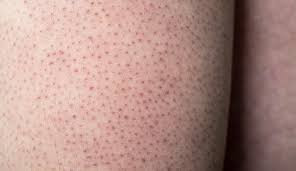
Keratosis Pilaris
Keratosis Pilaris
What is Keratosis Pilaris?
Keratosis Pilaris (KP) is a common, harmless skin condition characterized by small, rough bumps on the skin. These bumps often resemble goosebumps or "chicken skin" and are caused by a buildup of keratin, a protein that protects the skin from infections and other harmful things.
Causes
-
Keratin buildup: Excess keratin blocks hair follicles, forming small bumps.
-
Genetics: Tends to run in families.
-
Dry skin: KP is often worse in dry weather or in people with naturally dry skin.
-
Associated conditions: More common in people with eczema, asthma, or allergies.
Common Locations
-
Upper arms
-
Thighs
-
Cheeks
-
Buttocks
Symptoms
-
Small, rough bumps, usually skin-colored, red, or brown
-
Dry, rough patches of skin
-
Mild itching or irritation (sometimes)
-
Usually symmetrical on both sides of the body
Types of Keratosis Pilaris
-
Keratosis Pilaris Rubra: Red, inflamed bumps.
-
Keratosis Pilaris Alba: Non-red, rough bumps, often more noticeable in dry skin.
-
Keratosis Pilaris atrophicans: Rare, with hair loss and scarring.
Diagnosis
Diagnosis is mainly clinical, based on appearance and typical location. Usually, no tests are required.
Treatment
While KP is harmless and often improves with age, treatments can help improve skin texture and appearance:
Skincare Measures
-
Moisturizers: Thick, emollient creams to hydrate and soften skin.
-
Exfoliation: Gentle exfoliation with lactic acid, salicylic acid, or urea-based creams to remove dead skin cells.
-
Avoid harsh soaps: Use mild cleansers.
-
Humidifiers: To add moisture in dry environments.
Medical Treatments
-
Topical retinoids: Help to promote cell turnover.
-
Keratolytic agents: Such as alpha-hydroxy acids, urea, salicylic acid.
-
Laser therapy: Sometimes used for persistent redness or cosmetic concerns.
Home Remedies
-
Warm baths with mild soap.
-
Coconut oil or other natural moisturizers.
-
Avoid hot showers which can dry the skin more.
Prognosis
Keratosis Pilaris is chronic but benign. It often improves or resolves over time, especially after adolescence.
When to See a Doctor
-
If the skin becomes very irritated, inflamed, or infected.
-
If unsure about diagnosis.
-
For cosmetic treatment options.