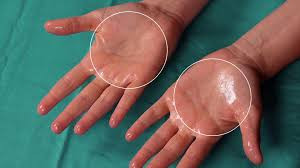
Hyperhidrosis
Definition
Hyperhidrosis is a condition characterized by excessive sweating beyond what is required for thermoregulation. It can affect specific areas (focal) or the entire body (generalized).
Types
-
Primary (Focal) Hyperhidrosis:
-
Typically affects palms, soles, underarms, or face.
-
Starts in childhood or adolescence.
-
No underlying medical cause.
-
-
Secondary (Generalized) Hyperhidrosis:
-
Caused by an underlying condition such as diabetes, hyperthyroidism, infections, or certain medications.
-
Affects larger areas or the whole body.
-
Often occurs during sleep.
-
Symptoms
-
Visible sweating even in cool temperatures or without exertion.
-
Clammy or wet palms and soles.
-
Sweat soaking through clothing.
-
Skin maceration or irritation.
-
Emotional or social distress due to sweat visibility.
Commonly Affected Areas
-
Hands (palmar hyperhidrosis)
-
Feet (plantar hyperhidrosis)
-
Underarms (axillary hyperhidrosis)
-
Face and scalp (craniofacial hyperhidrosis)
Causes
-
Primary Hyperhidrosis: Likely due to overactive sympathetic nerves; may have a genetic component.
-
Secondary Hyperhidrosis:
-
Infections
-
Endocrine disorders (e.g., hyperthyroidism, diabetes)
-
Neurological conditions (e.g., Parkinson's disease)
-
Medications (e.g., antidepressants, antipyretics)
-
Diagnosis
-
Physical examination
-
Patient history
-
Sweat tests (starch-iodine test, gravimetric test)
-
Blood or imaging tests to identify underlying causes in secondary hyperhidrosis
Treatment Options
Conventional/Medical
-
Topical Antiperspirants: Aluminum chloride-based products
-
Oral Medications: Anticholinergics (e.g., glycopyrrolate)
-
Botox Injections: Temporarily blocks sweat gland nerves
-
Iontophoresis: Electrical currents to reduce sweating in hands/feet
-
Microwave Therapy: Destroys sweat glands (e.g., miraDry)
-
Surgery:
-
Endoscopic Thoracic Sympathectomy (ETS) for severe cases
-
Sweat gland removal (less common)
-
Homeopathic Treatment
-
Silicea: For sweaty hands and feet
-
Calcarea Carbonica: For profuse sweating on the head
-
Thuja: Offensive-smelling sweat
-
Mercurius solubilis: Excessive sweating with weakness
Note: Consult a certified homeopath for personalized remedy selection.
Ayurvedic Treatment
-
Internal Herbs:
-
Lodhra, Usheera, Chandan (Sandalwood), Manjishtha
-
-
External Applications:
-
Sandalwood powder paste
-
Herbal powders to absorb sweat
-
-
Dietary Modifications:
-
Avoid spicy, oily, and fermented foods
-
Include cooling foods like cucumber, coconut water, and buttermilk
-
-
Panchakarma Therapies: Tailored detox treatments
Self-Care and Lifestyle Tips
-
Wear breathable, loose-fitting clothes
-
Use absorbent insoles or foot powders
-
Bathe regularly with antibacterial soap
-
Manage stress (yoga, meditation)
-
Stay hydrated
Conclusion
Hyperhidrosis, while not life-threatening, can significantly affect quality of life. Identifying the type and cause is crucial for effective management. A combination of medical, homeopathic, or Ayurvedic treatments can help reduce symptoms and improve comfort.