Gastroesophageal Reflux Disease
Gastroesophageal Reflux Disease (GERD)
What is GERD?
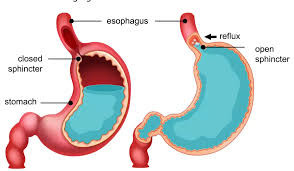
GERD is a chronic digestive disorder where stomach acid or, occasionally, bile flows back (refluxes) into the esophagus — the tube connecting your mouth and stomach. This backwash irritates the lining of the esophagus, causing discomfort and symptoms.
Causes
-
Weak or relaxed lower esophageal sphincter (LES), the muscle that acts as a valve between the esophagus and stomach.
-
Hiatal hernia (part of the stomach pushes up through the diaphragm).
-
Obesity or overweight.
-
Pregnancy.
-
Certain foods and drinks (spicy foods, chocolate, caffeine, alcohol).
-
Smoking.
-
Certain medications (like asthma meds, antihistamines, painkillers).
Symptoms
-
Heartburn (burning sensation in the chest, often after eating, worsened when lying down).
-
Regurgitation of food or sour liquid.
-
Difficulty swallowing.
-
Chronic cough.
-
Sore throat or hoarseness.
-
Chest pain (especially when lying down).
-
Feeling of a lump in the throat.
Complications
-
Esophagitis (inflammation of the esophagus).
-
Esophageal strictures (narrowing).
-
Barrett’s esophagus (precancerous changes in esophageal lining).
-
Increased risk of esophageal cancer.
Diagnosis
-
Clinical evaluation based on symptoms.
-
Upper endoscopy (to check esophagus lining).
-
Esophageal pH monitoring.
-
Esophageal manometry (to measure muscle contractions).
-
Barium swallow X-ray.
Treatment
Lifestyle and Home Remedies
-
Avoid foods that trigger reflux (fatty, spicy, acidic foods).
-
Eat smaller meals.
-
Avoid eating 2-3 hours before bedtime.
-
Elevate the head of the bed.
-
Lose weight if overweight.
-
Quit smoking and reduce alcohol.
-
Wear loose-fitting clothes.
Medications
-
Antacids (Tums, Rolaids) — neutralize stomach acid.
-
H2 blockers (ranitidine, famotidine) — reduce acid production.
-
Proton pump inhibitors (PPIs) (omeprazole, esomeprazole) — block acid production more effectively.
-
Prokinetics — help strengthen LES and empty stomach faster.
Surgery
-
Nissen fundoplication — wrapping the top of the stomach around the LES to strengthen it.
-
Other endoscopic procedures.
When to See a Doctor
-
Frequent or severe heartburn.
-
Difficulty swallowing.
-
Unexplained weight loss.
-
Chest pain not related to the heart.
-
Vomiting blood or black stools.
Summary
GERD is a common condition caused by acid reflux from the stomach to the esophagus. It can usually be managed well with lifestyle changes and medications, but if untreated, it can cause serious complications. Early diagnosis and treatment improve quality of life and prevent damage.