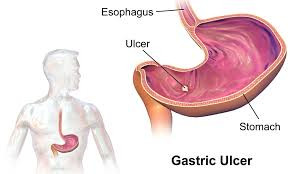
Gastric / Duodenal Ulcer
Gastric / Duodenal Ulcer
1. Definition
-
Gastric Ulcer: A sore or lesion that develops on the lining of the stomach.
-
Duodenal Ulcer: A sore that develops on the lining of the first part of the small intestine, called the duodenum.
Both are types of peptic ulcers, which result from the breakdown of the protective mucosal lining due to acid and digestive enzymes.
2. Causes
-
Helicobacter pylori (H. pylori) infection: A common bacterial infection linked to ulcers.
-
NSAIDs (Non-Steroidal Anti-Inflammatory Drugs): Like aspirin, ibuprofen that reduce the stomach’s protective mucus.
-
Excess stomach acid production: Due to stress, smoking, caffeine, or other factors.
-
Lifestyle factors: Smoking, alcohol, spicy foods (though these don’t cause ulcers but may aggravate).
-
Rare causes: Zollinger-Ellison syndrome (tumor causing excess acid production).
3. Symptoms
-
Burning or gnawing pain in the upper abdomen (may improve or worsen with eating).
-
Bloating, belching.
-
Nausea or vomiting.
-
Loss of appetite and weight loss.
-
In severe cases, vomiting blood or black tarry stools (indicating bleeding ulcer).
4. Differences Between Gastric and Duodenal Ulcers
| Feature | Gastric Ulcer | Duodenal Ulcer |
|---|---|---|
| Location | Stomach lining | Duodenum (first part of small intestine) |
| Pain timing | Usually worsens with eating | Usually relieved by eating, worse 2-3 hours after meals |
| Acid secretion | Normal or decreased | Increased acid secretion |
| Risk of cancer | Higher risk | Rare |
5. Diagnosis
-
Endoscopy: Direct visualization and biopsy to confirm ulcer and rule out cancer.
-
H. pylori tests: Breath test, stool antigen test, blood antibody test.
-
Barium swallow X-ray: Less common now, used to see ulcers.
6. Treatment
a. Medical Treatment
-
Eradication of H. pylori: Combination antibiotics + proton pump inhibitors (PPIs).
-
Acid suppression: Proton pump inhibitors (omeprazole, esomeprazole) or H2 blockers (ranitidine).
-
Avoid NSAIDs: Or use protective drugs if necessary.
-
Lifestyle changes: Stop smoking, reduce alcohol, avoid spicy foods, stress management.
b. Home Remedies (supportive)
-
Balanced diet avoiding irritants.
-
Avoid caffeine, alcohol, smoking.
-
Small, frequent meals.
-
Use of probiotics may help with gut flora balance.
c. Surgical Treatment
-
Rare, only in cases of complications like perforation, bleeding not controlled by medical means, or obstruction.
7. Complications
-
Bleeding ulcer (hematemesis or melena).
-
Perforation (sudden severe abdominal pain).
-
Gastric outlet obstruction (vomiting, bloating).
-
Increased risk of stomach cancer (especially gastric ulcers).
8. Prognosis
-
With proper treatment, most ulcers heal completely.
-
Risk of recurrence if H. pylori is not eradicated or NSAIDs continued.
-
Regular follow-up may be needed, especially in gastric ulcers.