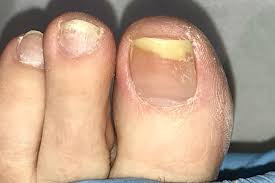
Fungal Nail Infection (Onychomycosis)
Fungal Nail Infection (Onychomycosis)
What is it?
A fungal nail infection is a common condition where fungi invade the nail bed, nail plate, or nail matrix, causing discoloration, thickening, and sometimes painful changes in the nails.
Causes
-
Dermatophytes (most common fungi)
-
Yeasts (like Candida)
-
Non-dermatophyte molds
Fungi thrive in warm, moist environments, so sweaty shoes, public showers, or swimming pools increase risk.
Symptoms
-
Discolored nails (white, yellow, brown, or greenish)
-
Thickened nails
-
Brittle, crumbly, or ragged nails
-
Distorted nail shape
-
Nails may separate from the nail bed (onycholysis)
-
Mild pain or discomfort in severe cases
Types of Fungal Nail Infection
-
Distal Subungual Onychomycosis:
Infection starts under the tip of the nail and spreads deeper. Most common type. -
White Superficial Onychomycosis:
White spots or patches appear on the surface of the nail. -
Proximal Subungual Onychomycosis:
Infection begins at the cuticle and spreads under the nail; seen more in immunocompromised individuals. -
Candidal Onychomycosis:
Caused by yeast, affects fingernails more often, especially in people with frequent water exposure.
Risk Factors
-
Older age
-
Sweaty feet
-
Wearing tight shoes
-
Nail trauma
-
Diabetes
-
Poor immune system
-
Walking barefoot in damp public areas
-
Previous athlete’s foot infection
Diagnosis
-
Physical examination
-
Nail clipping or scraping for microscopic examination and fungal culture
-
Sometimes PCR testing for fungal DNA
Treatment
Medical Treatments
-
Topical antifungals: Ciclopirox, Efinaconazole, Tavaborole (less effective alone, better for mild cases)
-
Oral antifungals: Terbinafine, Itraconazole (more effective for moderate to severe infections but have potential side effects)
-
Nail removal: In severe or resistant cases (chemical or surgical)
Treatment usually takes several months because nails grow slowly.
Home Care Tips
-
Keep nails clean and dry
-
Avoid sharing nail clippers or footwear
-
Wear breathable shoes and moisture-wicking socks
-
Use antifungal powders or sprays in shoes
-
Trim nails regularly and file down thickened areas
-
Avoid nail polish and artificial nails during treatment
Prevention
-
Maintain good foot hygiene
-
Wear sandals in public showers and pool areas
-
Change socks daily
-
Avoid tight, non-breathable footwear
-
Treat athlete’s foot promptly
When to See a Doctor
-
If nail changes worsen or spread
-
If pain or inflammation develops
-
If you have diabetes or immune disorders and suspect infection
-
If home remedies don’t help after a few weeks