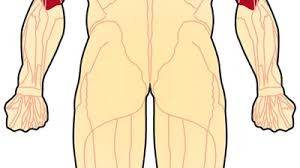
Emery-Dreifuss Muscular Dystrophy
What is Emery-Dreifuss Muscular Dystrophy?
Emery-Dreifuss Muscular Dystrophy (EDMD) is a rare genetic disorder characterized by progressive muscle wasting and weakness, joint contractures (stiffness), and heart abnormalities. It primarily affects the skeletal muscles used for movement and the cardiac muscle, leading to life-threatening heart complications.
Causes
EDMD is caused by mutations in genes that encode proteins involved in the structure and function of the nuclear envelope of muscle cells. The most common genes involved are:
-
EMD gene (encodes emerin protein) — causes X-linked EDMD.
-
LMNA gene (encodes lamin A/C proteins) — causes autosomal dominant or autosomal recessive forms.
These mutations weaken the muscle cell’s nuclear envelope, leading to muscle degeneration and cardiac issues.
Symptoms and Signs
Symptoms usually appear in childhood or early adolescence and progress slowly.
-
Early signs:
-
Joint contractures: stiffness in elbows, Achilles tendons (heel cords), and neck.
-
Muscle weakness and wasting: often begins in the shoulders, upper arms, and calves.
-
-
Muscle symptoms:
-
Difficulty lifting arms or walking on tiptoes.
-
Weakness in limb and trunk muscles.
-
-
Cardiac symptoms:
-
Arrhythmias (irregular heartbeats).
-
Conduction blocks (problems with electrical signals in the heart).
-
Risk of sudden cardiac arrest.
-
-
Other signs:
-
Possible foot deformities due to contractures.
-
Fatigue and muscle cramps.
-
Types of EDMD
-
X-linked EDMD
Caused by mutations in the EMD gene; affects mostly males. Female carriers may have mild symptoms. -
Autosomal dominant EDMD
Caused by mutations in the LMNA gene; can affect both males and females. -
Autosomal recessive EDMD
Also caused by LMNA mutations but requires two copies of the mutated gene.
Diagnosis
-
Clinical examination and family history.
-
Genetic testing to identify mutations.
-
Electromyography (EMG) and muscle biopsy.
-
Cardiac evaluation: ECG and echocardiogram.
Treatment and Management
Currently, there is no cure for EDMD, but treatments focus on managing symptoms and preventing complications:
-
Physical therapy to maintain muscle strength and joint flexibility.
-
Orthopedic interventions like braces or surgery for contractures.
-
Cardiac monitoring to detect arrhythmias early.
-
Medications such as pacemakers or implantable cardioverter defibrillators (ICDs) for heart rhythm management.
-
Lifestyle adaptations to avoid strenuous activities that could worsen heart or muscle issues.
Prognosis
EDMD progresses slowly but can cause serious cardiac complications. Early diagnosis and cardiac care improve life expectancy and quality of life.
If you want, I can also provide details on homeopathic or Ayurvedic approaches, but for such genetic and cardiac-related disorders, conventional medical management is essential.