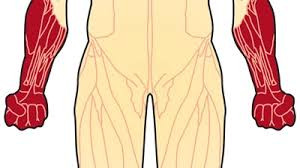
Distal Muscular Dystrophy (DMD)
What is Distal Muscular Dystrophy?
Distal Muscular Dystrophy is a group of rare genetic muscle disorders characterized by progressive weakness and wasting of the distal muscles—those farther from the center of the body, such as the muscles in the hands, forearms, feet, and lower legs.
Unlike other types of muscular dystrophy that typically affect proximal muscles (closer to the torso), distal muscular dystrophy primarily involves the muscles of the extremities.
Causes
-
Genetic mutations affecting specific muscle proteins.
-
Can be inherited in autosomal dominant or autosomal recessive patterns depending on the subtype.
-
Mutations often involve genes like TTN (titin), dysferlin, or anoctamin-5 among others.
Types of Distal Muscular Dystrophy
There are several subtypes, including:
-
Welander Distal Myopathy
-
Typically affects adults in middle age.
-
Characterized by weakness and atrophy of finger and wrist extensor muscles.
-
-
Udd Myopathy (Tibial Muscular Dystrophy)
-
Primarily affects the muscles in the lower legs, especially around the tibia.
-
Usually appears in adulthood.
-
-
Miyoshi Myopathy
-
Mainly affects the calf muscles.
-
Symptoms often begin in late teens or early adulthood.
-
-
Distal Limb-Girdle Muscular Dystrophy
-
Combines features of limb-girdle and distal dystrophies.
-
Symptoms
-
Gradual muscle weakness starting in the distal muscles (hands, forearms, feet, lower legs).
-
Muscle wasting and atrophy in the affected areas.
-
Difficulty with fine motor skills (e.g., buttoning shirts, writing).
-
Foot drop or difficulty walking due to weakness in lower leg muscles.
-
Muscle cramps or discomfort (sometimes).
-
Symptoms usually begin in adulthood but can vary.
Diagnosis
-
Clinical examination: muscle weakness pattern and progression.
-
Family history: to identify inheritance pattern.
-
Electromyography (EMG): to assess muscle electrical activity.
-
Muscle biopsy: shows dystrophic changes.
-
Genetic testing: identifies specific gene mutations.
-
MRI of muscles: can help assess muscle involvement.
Treatment
There is no cure for distal muscular dystrophy, but treatments focus on symptom management and improving quality of life:
-
Physical therapy: to maintain muscle strength and flexibility.
-
Occupational therapy: to help adapt daily activities.
-
Orthotic devices: such as braces to support weakened muscles.
-
Medications: no specific drugs for the disease itself, but symptomatic treatment may include pain relief.
-
Assistive devices: wheelchairs or walkers in advanced stages.
-
Regular monitoring: for respiratory or cardiac complications in some forms.
Prognosis
-
Progression is generally slow compared to other muscular dystrophies.
-
Most patients maintain mobility for many years.
-
Severity and rate of progression vary by subtype.
-
Life expectancy is often normal unless complications arise.