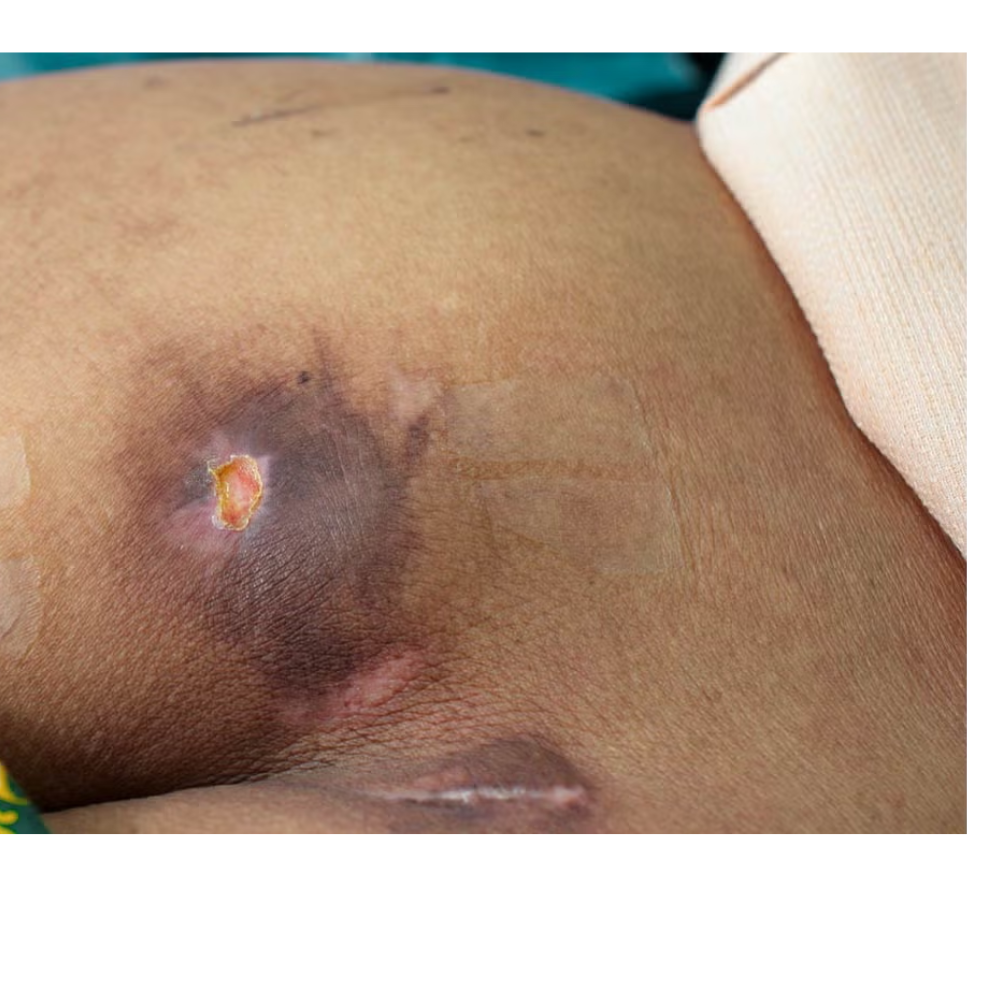
Bed Sores (Pressure Ulcers)
What are Bed Sores (Pressure Ulcers)?
Bed sores, also known as pressure ulcers or decubitus ulcers, are areas of damaged skin and tissue caused by prolonged pressure on the skin. They commonly develop on areas of the body that are bony or have little muscle or fat cushion, such as the heels, elbows, hips, and lower back. The constant pressure restricts blood flow to the affected area, leading to tissue damage. Bed sores are most common among individuals who are bedridden or immobile for extended periods, such as those in hospitals or nursing homes.
Causes of Bed Sores
- Prolonged Pressure:
- When pressure is applied to the skin for an extended period (usually 2–3 hours), it restricts blood flow to the affected area, leading to skin and tissue damage.
- When skin rubs against clothing or bedding, or when a person slides down in bed, it causes friction or shear, contributing to the development of bed sores.
- Excess moisture from perspiration or incontinence can weaken the skin, making it more prone to damage.
- Insufficient nutrition or hydration can compromise the skin’s ability to heal and resist damage.
- Conditions like diabetes, vascular diseases, and neurological disorders can increase the risk of bed sores.
Symptoms of Bed Sores
The symptoms of bed sores vary depending on the stage of development. There are four stages of pressure ulcers, with each stage showing increasing severity of tissue damage.
- Stage 1:
- Symptoms: Red, non-blanching skin (skin that doesn’t turn white when pressed), which may be painful, warm, or swollen. The skin remains intact.
- Symptoms: Blistering, open wounds, or sores. The skin appears shallow and may show a pink or red area.
- Symptoms: Full-thickness skin loss, with damage to the skin layers and potentially deeper tissue. The wound may look like a crater and involve fat tissue.
- Symptoms: Extensive tissue damage, involving muscle, tendon, or bone. The wound may be deep, and infection is common.
Other general symptoms include pain, swelling, and an unpleasant odor if infection occurs.
Diagnosis of Bed Sores
- Physical Examination:
- A healthcare provider will assess the area of concern to determine the stage of the bed sore.
- If infection is suspected, a sample from the wound may be taken for testing.
- In severe cases, imaging tests (such as X-rays) may be used to assess damage to deeper tissues.
Homeopathic Treatments for Bed Sores
Homeopathy offers a natural approach to healing bed sores by promoting tissue repair, reducing inflammation, and preventing infection. The remedies are individualized based on the person's overall constitution, the severity of the condition, and specific symptoms.
Common Homeopathic Remedies for Bed Sores
- Arnica Montana:
- Known for its ability to treat bruising, soreness, and pain from trauma, Arnica helps in the healing process of bed sores, especially in the early stages.
- Often used for wound healing, Calendula can aid in the regeneration of skin and reduce the risk of infection in open wounds.
- Used for abscesses and pus-filled wounds, Hepar Sulphuris is beneficial when there is infection and discharge from the wound.
- Helps in healing nerve injuries and painful wounds, especially when there is intense pain associated with the sores.
- Used when the ulcer is infected, with foul-smelling discharge and sensitivity to touch.
- Known for its ability to promote deep healing of the skin and tissues and is often used in chronic cases.
Usage Guidelines
- Potency: Remedies are typically used in potencies like 30C or 200C.
- Dosage: Consult a qualified homeopath to determine the appropriate dosage and remedy based on the individual’s symptoms and overall health.
Ayurvedic Treatments for Bed Sores
Ayurveda focuses on balancing the body’s internal energy, or doshas, and promoting healing through natural remedies. For bed sores, Ayurveda emphasizes improving circulation, promoting tissue regeneration, and preventing infection.
Ayurvedic Herbs for Bed Sores
- Turmeric (Curcuma longa):
- A powerful anti-inflammatory and antimicrobial herb that promotes tissue healing and reduces infection.
- Known for its antimicrobial properties, Neem helps to cleanse the wound, reduce infection, and accelerate healing.
- Used topically, Aloe Vera soothes inflamed skin, promotes healing, and keeps the area moisturized.
- A rejuvenating herb that helps in improving vitality and overall strength, supporting recovery and immune function.
- Known for its blood-purifying and anti-inflammatory properties, Manjistha is used to promote healing and prevent infection.
Ayurvedic Therapies for Bed Sores
- Panchakarma:
- Virechana (purgation) and Vamana (therapeutic vomiting) can be used to cleanse the body of toxins that may slow healing. These treatments should be done under the guidance of an Ayurvedic practitioner.
- Applying warm medicated oils like Mahanarayan oil or Bala Ashwagandha oil helps improve circulation, reduce pain, and promote tissue regeneration.
- This therapy, where warm oils are poured over the forehead, helps reduce stress, which may aid in the overall healing process.
- Paste made from turmeric, neem, or manjistha can be applied directly to the wound for reducing infection and accelerating healing.
Dietary Recommendations
- Increase Protein Intake:
- Consume protein-rich foods such as lentils, beans, dairy, and lean meats to support tissue regeneration.
- Incorporate foods like ginger, garlic, turmeric, and leafy greens to reduce inflammation and promote healing.
- Drink adequate water and herbal teas like turmeric tea and ginger tea to support skin and tissue health.
- Avoid processed foods, refined sugars, and excessive fats, as they may slow healing and increase inflammation.
Lifestyle Tips
- Regular Position Changes:
- Change positions regularly to relieve pressure on vulnerable areas and improve blood circulation.
- Keep the skin clean and dry to prevent infection. Use gentle soaps and moisturizers to avoid skin damage.
- If mobility allows, gentle movements or stretches can help improve circulation and prevent further tissue damage.
- Engage in meditation, pranayama, or other relaxation techniques to reduce stress, which can hinder healing.
Conclusion
Bed sores are a serious concern for individuals with limited mobility, but with prompt care and appropriate treatment, their progression can be halted or even reversed. Both homeopathic and Ayurvedic treatments focus on supporting the body’s natural healing process, reducing inflammation, and preventing infection. A combination of natural remedies, proper wound care, nutrition, and lifestyle changes can significantly enhance recovery. Always consult a healthcare professional for severe or advanced cases of bed sores to ensure appropriate medical care.